About this book
Astrology divides the sky in two different ways, and beginners often confuse them. A sign is a sector of the zodiac: Aries, Taurus and the rest, the same for everyone born on a given day. A house is a division of the birth chart itself, set by the exact time and place of birth, and each house describes an area of life. The signs say how; the houses say where.
The houses have a long history, and their meanings have shifted along the way. A Short History of the Houses tells that story once, so the chapters can focus on each house in turn.
Because the houses depend on the moment and place of birth, they are what make a chart personal. Two people born on the same day in the same town share their signs but can have entirely different houses.
Each chapter covers one house, and every chapter follows the same plan, so once you have read one you can find your way round them all. Each opens with what the house rules and how its meaning developed, from the Greek astrologers of Roman Egypt to the psychological astrology of the twentieth century. It then works through the twelve signs on the house, the planets in it, and its ruling planet in each of the twelve houses. Every chapter ends by reading the house in the same example chart.
Conventions
The book uses the tropical zodiac and whole sign houses, the oldest house system, in which the whole rising sign is the First House, the next sign the Second, and so on. Aspects use a 6° orb, the default in the Slogit Birth Chart Studio. Where another house system would give a different answer, the chapter says so. The history page compares the main house systems.
One example chart runs through the whole book: a birth in Bangor, North Wales, at 03:00 GMT on 16 November 1955, with Libra rising. You can see it read in full in Chapter One.
How to read a house
The same eight steps apply to every house. The chapters supply the meanings; these steps tell you how to put them together.
- The sign on the house sets the style: how the affairs of the house are handled.
- Planets in the house show which energies are active there. An empty house is normal.
- The ruler of the house is the planet that rules the sign on it. The house it sits in shows where this house's business is carried out.
- The condition of the planets means their strength by sign, whether they move direct or retrograde, and how strong their house position is.
- Aspects are the angles other planets make to the house's planets and ruler: what helps it and what fights it.
- The natural significator is the planet that stands for the house's topic in every chart, such as Venus for love.
- Timing covers when the house switches on, through transits and annual profections.
- Derived houses count from another house as if it were the First, to read about other people in the chart.
The skill is in the combining. A good reading does not list the factors one by one; it weighs them against each other, and treats the contradictions as the most interesting part. Chapter One shows how.
The chapters
Choose a house to open its chapter.
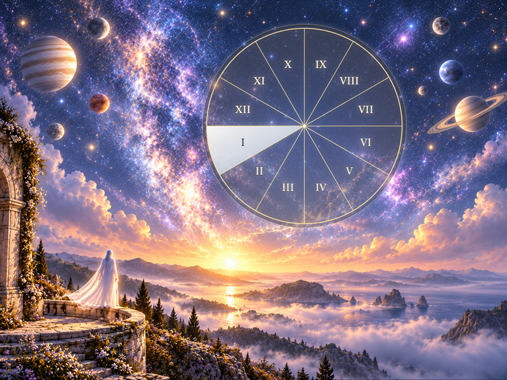
The First House
Vita: life
Self, body, appearance, temperament, beginnings
Read the chapter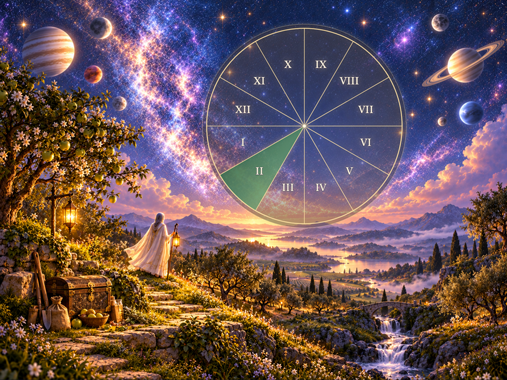
The Second House
Lucrum: wealth
Money, possessions, earning, resources, self-worth
Read the chapter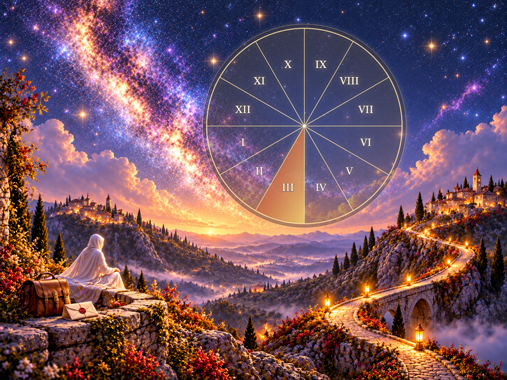
The Third House
Fratres: brothers
Siblings, communication, writing, short journeys, neighbours
Read the chapter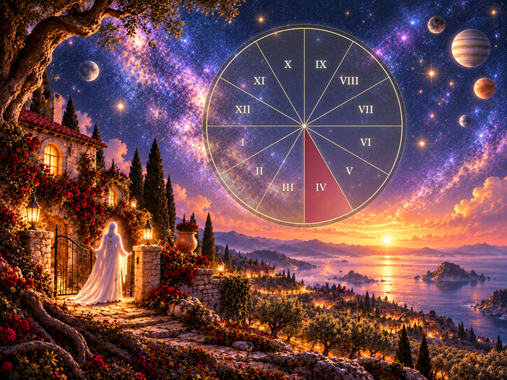
The Fourth House
Genitor: father
Home, family, roots, land and property, endings
Read the chapter
The Fifth House
Nati: children
Children, pleasure, creativity, romance, play
Read the chapter
The Sixth House
Valetudo: health
Illness and health, work, routine, service, small animals
Read the chapter
The Seventh House
Uxor: wife
Marriage, partnership, close allies, open enemies
Read the chapter
The Eighth House
Mors: death
Death, inheritance, shared resources, debts, crisis
Read the chapter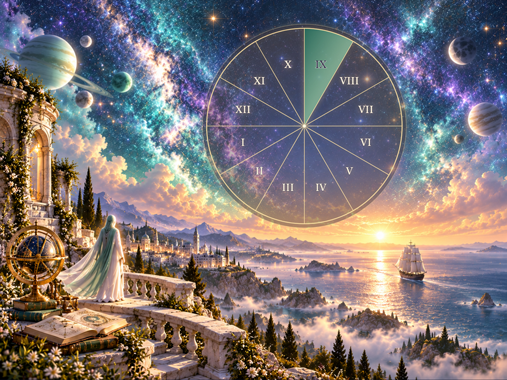
The Ninth House
Pietas: religion
Religion, philosophy, higher learning, long journeys, law, publishing
Read the chapter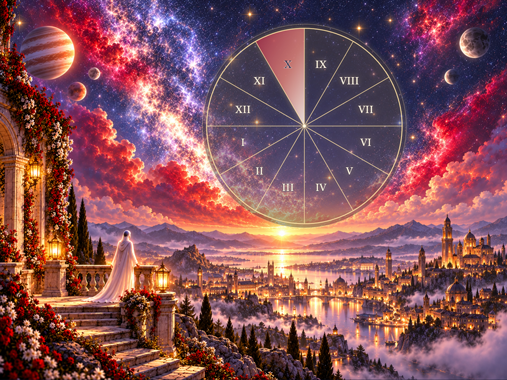
The Tenth House
Regnum: kingdom
Career, reputation, authority, achievement, public life
Read the chapter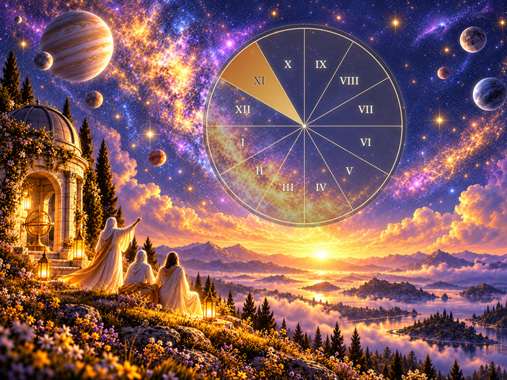
The Eleventh House
Benefacta: friends and benefits
Friends, allies, groups, hopes, benefactors
Read the chapter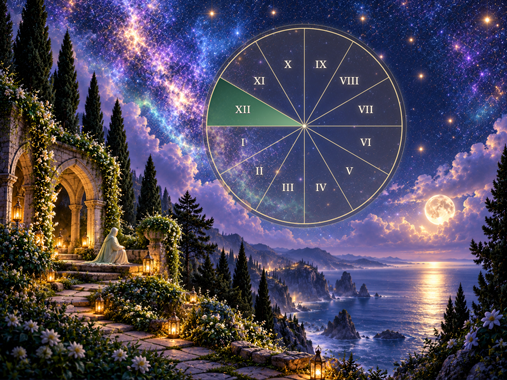
The Twelfth House
Carcer: prison
Solitude, confinement, hidden enemies, sorrow, the unconscious
Read the chapter